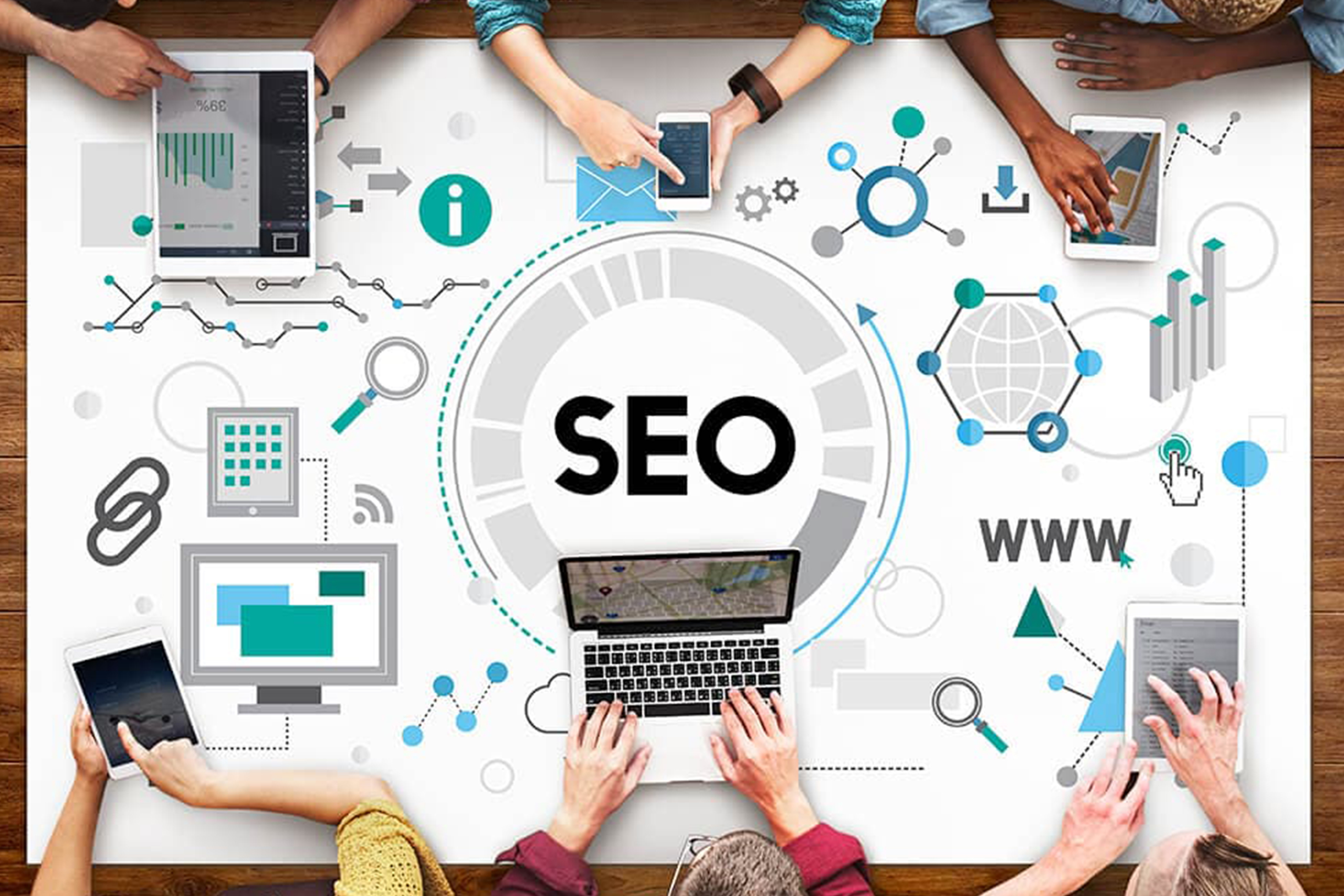
What is SEO? A Beginner’s Guide
Anyone who uses the internet also Googles. There is hardly anyone who doesn’t use the internet search engine. Above all, it is also used by people who are looking for the right product or the appropriate service. This is a great opportunity for companies.
Companies that want to be successful online should therefore do more than just put a website online. They have to ensure that people find them. The solution: SEO – Search Engine Optimization. But what exactly is SEO?
In this article, you will learn what is behind the concept, how you carry out SEO marketing, what benefits search engine optimization brings you, and what the difference is to SEA.
Definition and meaning of SEO
SEO stands for Search Engine Optimization, and it encompasses all technical and content measures aimed at making a website as visible as possible in search engine results and thereby driving traffic. Thus, search engine optimization belongs to online marketing and more specifically to pull marketing.
SEO involves a combination of measures that take place both on the website itself (On-Page SEO) and outside the website (Off-Page SEO).
On-Page optimizations include aspects such as the quality and relevance of the content, the use of suitable keywords, a clean technical structure (fast loading times, optimization for mobile devices), and good internal linking.
Off-Page SEO mainly focuses on building high-quality backlinks – that is, links from other trustworthy and topically relevant websites.
What is SEO Marketing?
The question “What is SEO?” can also be answered as follows: SEO is the primary channel for generating traffic for most companies and is therefore an essential part of online marketing.
Companies that engage in SEO marketing – and this is recommended for the vast majority – actively work to design their website content so that it can be found via search engines.
The goal is the best possible ranking in the organic (i.e., unpaid) search results – especially on Google, which is by far the most used search engine. This is because a high ranking ensures greater visibility and usually leads to more website visits and, in turn, more potential customers.
Online shops, companies with a local target group, high-priced products or services that require explanation, particularly benefit from this.
Which Search Engines are Relevant for SEO?
When talking about SEO optimization, Google is usually discussed. This is because Google is by far the most widely used search engine. In principle, however, you can also optimize websites for alternatives such as Bing, Ecosia, DuckDuckGo, or SearchGPT.
A great advantage of SEO: It is a long-term and sustainable marketing strategy. Although it usually takes several months for the first results to become visible, they are more stable than short-term measures like paid advertising. A well-placed ranking usually remains for a longer period.
At the same time, SEO marketing is lucrative because the costs are low compared to other marketing measures. This also makes it attractive for small and medium-sized companies with limited marketing budgets.
Today, SEO optimization is closely linked to content marketing. It accompanies potential customers along the entire Customer Journey – from initial awareness to conversion. Ideally, it is supported by other measures such as paid advertisements, social media, or email marketing.
Improving SEO ranking: Algorithm and ranking factors explained
To understand how to effectively practice SEO, you should know how modern internet search engines work. Let’s take a quick look into the past:
In the early years of Google & Co., search engines primarily evaluated websites based on the frequency of certain keywords. This quickly led to manipulation – so-called keyword stuffing. Site operators excessively repeated search terms, sometimes in white text on a white background, to appear as high as possible in the ranking. The quality of the search results suffered accordingly.
Search engines are now much more intelligent. They no longer determine their rankings merely based on keywords. Instead, they work with complex algorithms that consider many different factors to evaluate the relevance and qualityof a website.
The goal is to show users the most suitable and trustworthy content possible. The order of the search results – i.e., the ranking – is based on this complex evaluation.
The Google algorithm is certainly the most sophisticated of all. It is said to consider up to 200 different signals for its evaluation. Not all of these so-called ranking factors are publicly known. However, those we do know and that can be specifically optimized are the focus of SEO efforts.
Most important types of ranking factors:
- High-quality content: Content that is informative, relevant, and well-structured.
- User-friendliness: Intuitive navigation, clear page structure, mobile optimization.
- Authority: Trustworthiness and reputation of the domain, e.g., through backlinks.
- Technology: Fast loading times, clean programming, secure connection (HTTPS).
It is also important to know that the algorithms are not set in stone. Quite the opposite: Google updates its algorithm several times a year. Sometimes through smaller adjustments, sometimes through comprehensive so-called Core Updates. These are usually not announced in advance but can have noticeable effects on rankings.
For sustainable SEO success, it is therefore crucial that you focus on quality and user-centricity – instead of short-term tricks.
SEO measures: The three pillars of search engine optimization
How exactly does SEO optimization work now? The basic principle is simple: To be found via a search engine, a website must offer searchers exactly what they are looking for. Your task as a website operator is, therefore, to design your content so that it matches the intention behind a Google search as closely as possible.
The necessary SEO measures can be divided into three areas:
- On-Page SEO
- Off-Page SEO
- Technical SEO
a) On-Page SEO: Optimizing content and structure
What is On-Page SEO?
On-Page SEO describes all technical, content, and structural measures that you implement directly on your website. The goal is to prepare content in such a way that the search engine classifies it as relevant, high-quality, and user-friendly and therefore suggests it to searchers.
This is where keywords come into play as the heart of search engine optimization. These are the terms that users enter into Google or other search engines to find suitable content. The first task in SEO marketing is to find out which keywords your target group uses and what they hope to achieve with the respective search (the so-called search intent). This process is called keyword research.
Once you have identified the appropriate keywords, you create relevant content, such as landing pages or blog articles, that incorporate these terms. Unlike in the early days of search engine optimization, however, the goal is not to embed the corresponding keyword as often as possible in the text.
Instead, Google today wants content that is written for users, is relevant, and offers them added value. The appropriate keywords are incorporated naturally and automatically into such content.
By using keywords, Google can better classify the content of a website. However, they should not only be used in the text itself but also in the so-called Meta Tags.
The Meta Title and the Meta Description appear in the Google search results and influence whether a user clicks on your page. They should be precisely formulated and encourage clicking.
Another central point of On-Page SEO is the User Experience: Users who come to your page should have a positive experience there. Your website should be clearly designed and optimally usable on mobile devices as well. A responsive design and a clear page structure are now standard for good SEO work.
b) Off-Page SEO: Building trust and authority
What is Off-Page SEO?
Off-Page SEO includes all optimization measures that are carried out outside your own website to improve its visibility, authority, and credibility in the eyes of search engines. The focus is on building backlinks. These are links from other websites to your content.
In link building, the aim is to obtain high-quality backlinks, i.e., references from other relevant and authoritative websites, to your own site. Search engines interpret such links as recommendations and as a sign that the linked website is trustworthy and a valuable source of information.
The quality of the backlinks – measured by the authority of the linking domain, its thematic relevance, and the naturalness of the link profile – is more crucial than the sheer quantity.
Beyond classic link building, Off-Page SEO also includes other important aspects. These include Brand Mentions, where the name of a company or brand is mentioned in articles, forums, or social media without a direct link, which can also be seen as a positive signal for search engines.
Social Signals, i.e., shares, likes, and comments in social networks like LinkedIn, Facebook, or X, are also part of this. They show Google that your content is being shared and discussed.
c) Technical SEO: The basis for visibility
What is Technical SEO?
Technical SEO is a sub-area of search engine optimization that focuses on optimizing the technical structure and functionality of a website so that search engines can efficiently crawl, index, and understand it. The goal is to create a solid foundation upon which all other SEO measures can build.
This starts with indexing. Your website must be technically structured so that Google can find it, search it (crawl it), and include it in the search index. This includes a clean, error-free page structure (e.g., the management of duplicate content and correct redirects), the XML sitemap, the implementation of structured data (Schema Markup), and a correct robots.txt file.
Loading speed also plays a decisive role: Fast pages (on desktop and mobile devices) improve the user experience and can therefore also influence the ranking. The Core Web Vitals (CWV) Score is crucial here, for example. In addition, security is a factor: Websites with HTTPS encryption are preferred by Google.
What is the difference between SEO and SEA?
In the world of search engine marketing, there is another abbreviation besides SEO: SEA. This stands for Search Engine Advertising. Together, SEO and SEA form SEM: Search Engine Marketing.
Although both abbreviations sound very similar, they pursue different approaches. SEO optimization relies on organic visibility. Through high-quality content, technical optimization, and Off-Page SEO, website managers ensure that their content is well-evaluated and highly ranked by search engines. Visibility is thus created without direct costs for clicks or placements – but with strategic and long-term effort.
With SEA, on the other hand, visibility is paid for. Companies place ads that are displayed in the search results above or below the organic hits, mostly on Google, in the form of so-called Google Ads. These ads appear for specific keywords and follow the Pay-per-Click principle: Costs only arise when a user actually clicks on the ad.
SEO and SEA are useful in different situations. Ads are suitable for short-term campaigns, product launches, or seasonal offers to quickly build reach. SEO is the appropriate strategy for generating sustainable website traffic, ensuring brand authority, and long-term visibility.
In practice, a combination of both measures is often sensible: SEA delivers quick successes, while SEO ensures stable results in the long run.
| Area | SEO (Search Engine Optimization) | SEA (Search Engine Advertising) |
| Approach | Organic visibility | Paid visibility (Advertising) |
| Costs | No direct costs per click/placement (indirect costs through effort) | Cost per click (Pay-per-Click – PPC) |
| Mechanism | Ranking through high-quality content, technical optimization and Off-Page SEO | Placement of ads (e.g., Google Ads) for specific keywords |
| Appearance | In the organic/natural search results | Above or below the organic search results |
| Durability | Long-term and sustainable | Short-term, as long as the budget is available and the campaign is running |
| Suitable for | Long-term website traffic, brand authority and sustainable visibility | Short-term campaigns, product launches, seasonal offers, quick reach |
| Effort/success | Strategic, long-term effort for stable results | Quick successes through direct payment |
How to proceed with SEO as a beginner? SEO optimization step by step
Step 1: Link SEO Strategy and Marketing Strategy
If you want to start SEO optimization, you should first define a marketing strategy and what role search engine optimization plays in it. SEO is not an end in itself, but supports specific corporate goals – such as building reach, lead generation, or strengthening the brand.
Step 2: Set up Google Search Console
The next step is to register your website in the Google Search Console. This allows you to create a sitemap and ensure that your pages can be indexed. You also receive valuable data there about the performance of your website in Google Search.
Step 3: Perform Keyword Research
Then, perform keyword research, for example, with the help of an SEO tool like Ubersuggest, Ahrefs, or SEMrush. Find out what your target group is searching for, which keywords they use, and what the search intent is behind these terms.
Step 4: Content Audit and Content Planning (Content Roadmap)
Based on your findings, plan the structure of your website and a list of content to be created (Content Roadmap). Here it makes sense to conduct a Content Audit to see which content already exists and which you still need to create to meaningfully cover your relevant keywords.
Plan your content thoughtfully along the Customer Journey to draw your customers’ attention to you at various points of the journey and create multiple touchpoints.
Step 5: Create Content
Subsequently, you specifically create SEO texts – i.e., content that is equally relevant for users and search engines. Pay attention to:
- Naturally integrated keywords
- A clear structure with subheadings
- Meaningful links
- Optimized meta tags
Step 6: Analyze Performance and Measure Success
After publication, the phase of performance analysis begins. Regularly monitor the visibility, click numbers, and rankings of your content – for example via the Search Console and Google Analytics. From this, you can draw important conclusions to further improve your content or plan new content more specifically.
Step 7: Continuous Optimization
SEO is a continuous process. If you want to be successful in the long term, you must regularly optimize content, address new topics, and keep an eye on technical developments.
What are the important SEO key figures?
Now that it has been clarified what SEO is, the next central question arises: “How do I measure the success of my SEO measures?”
The most important KPIs in search engine optimization are:
| Key Figure | Definition and Meaning |
| Click-through-rate (CTR) | Indicates how many users clicked on your website after it appeared in the search results. A higher ranking usually leads to a higher CTR. |
| Bounce rate | Shows the percentage of users who immediately leave your website after visiting it without interacting or visiting other pages. A high rate can indicate problems with relevance, user guidance, or loading times. |
| Average session duration | Measures how long users stay on your website on average. A duration under 30 seconds can indicate quality defects. |
| Number and quality of backlinks | Shows how many external websites link to your pages. Many high-quality references from other websites are positive for your rankings. |
Important SEO trends for the year 2026
The year 2025 will bring significant changes and a further development of SEO strategies, moving away from pure keyword approaches toward more user-centric methods. Artificial intelligence (AI) is the central driver of this development.
Here is an overview of some of the most important developments:
- AI as a dominant factor: The optimization of websites and content for AI is summarized under the term GEO (Generative Engine Optimization) (see FAQ). AI will most strongly influence the SEO industry, especially through generative AI in search platforms (such as Google AI Overviews) and AI-generated content. SEO experts must understand not only Google-based AI models but also other large language models (LLMs) such as Perplexity, ChatGPT, Claude, and Gemini, which deliver different search results and are used by users for information retrieval.
- Importance of traffic quality and ROI: While keyword rankings and organic page views remain important metrics, the focus is increasingly on traffic quality. It is crucial to prove ROI (return on investment) by tracking customer journeys and conversions to overcome budget constraints and demonstrate customer value. This is particularly important against the background of decreasing SEO traffic due to AI overviews and chatbots.
- Diversification of search sources: In addition to traditional Google search, social search platforms (e.g., Reddit, TikTok, LinkedIn) are gaining importance because they offer unique human perspectives and are increasingly appearing in SERPs. Community engagement is becoming an important growth strategy for brands.
- Video content as a differentiating factor: Video content remains a powerful tool for differentiation and offers significant potential to expand visibility and traffic sources. Video content is also being increasingly integrated into AI evaluations.
FAQ
What is an SEO strategy?
An SEO strategy is a detailed plan and approach to improve a website’s visibility in organic search results from search engines like Google. It includes defining goals, identifying the target audience and relevant keywords, optimizing the website’s technical aspects, creating high-quality content, and building backlinks to attract more qualified traffic and increase the website’s authority in the long term.
Why is SEO important for companies?
SEO is crucial for companies because most customers begin their purchase journey or information search with a search engine. High visibility in search results, especially in the top positions, drives more qualified organic traffic to the website. This increases brand awareness, trust and credibility of the company. In the long term, SEO is a sustainable investment that continuously attracts new potential customers, improves the user experience, and thus generates more leads, sales and business growth, often at a lower cost per acquisition than paid advertising.
How long does it take until SEO results become visible?
The time until SEO results become visible varies greatly and depends on factors such as the competitiveness of the keywords, the age and authority of the website, the quality of previous SEO measures, and the industry. In general, the first noticeable improvements are often visible after 3 to 6 months, with significant and sustainable success, and a full SEO benefit usually takes 6 to 12 months or even longer, especially for new websites or in highly competitive markets.
What are Backlinks?
Backlinks, also known as inbound links or incoming links, are links from an external website that point to your own website. They are a crucial ranking factor for search engines because they are seen as a vote of confidence or recommendations from other websites. The more high-quality and relevant backlinks a website has, the higher its authority and credibility in the eyes of search engines, which can positively affect the ranking.
What is Link building?
Link building is the process of actively obtaining high-quality backlinks from other websites to a website. The goal is to improve the Domain Authority and the website’s ranking in search results. This can be achieved through various tactics, including creating shareable content, guest blogging on other blogs, reaching out to influencers or industry experts, fixing broken links, and mentioning brands in relevant online publications.
What is Local SEO?
Local SEO (local search engine optimization) is a specific SEO strategy that aims to improve a company’s visibility in local search results. This is particularly important for businesses with a physical location or those offering local services. Measures include optimizing the Google My Business profile, capturing local keywords, building local citations (NAP information), managing online reviews, and creating content tailored to local target groups.
What is Generative Engine Optimization (GEO)?
Generative Engine Optimization (GEO) is the optimization of content for AI-driven generative models and “answer machines” such as Google AI Overviews, ChatGPT, and other LLMs. In contrast to traditional SEO, which aims for clicks, the focus of GEO is on ensuring that content is directly understood, processed, and used or cited by AI systems in their generated answers. This requires strategic structuring and content preparation to promote its inclusion in AI answers.
What is the difference between SEO (search engine optimization) vs. GEO (generative engine optimization)?
The fundamental difference between SEO and GEO lies in their primary goal and the platforms they target. SEO (Search Engine Optimization) focuses on optimizing websites and content to improve their ranking in traditional organic search results from search engines like Google and encourage users to click on the website. The goal is to drive traffic to your own domain. In contrast, GEO (Generative Engine Optimization) aims to optimize content so that it is directly understood, processed, and used or cited by AI-driven generative models and “answer machines” (such as Google AI Overviews, ChatGPT, or Perplexity) in their generated answers. Here, it is less about the click to your own website and more about your own information appearing as an authority directly in the AI summaries.
What is the difference between SEO and SEA?
SEO (search engine optimization) and SEA (Search engine advertising) are sub-disciplines of Search Engine Marketing (SEM), but differ fundamentally in their function. SEO focuses on the organic (unpaid) improvement of a website’s visibility in search engines by optimizing its content and structure to achieve higher rankings. This is a long-term process. SEA, on the other hand, refers to paid search advertising, typically through ads prominently displayed in search results (e.g., Google Ads). SEA provides immediate visibility and clicks but requires a continuous budget, while SEO delivers more sustainable and often more cost-effective results over time.
Conclusion: Search engine optimization is sustainable marketing
Search engine optimization is a cost-effective and sustainable part of online marketing. In principle, every company can make its content visible on Google and other search engines through SEO at a reasonable cost. The alpha and omega is to create relevant, useful and well-prepared content for people.
However, SEO is not a short-term measure. Results often only become visible after several months. Therefore, the earlier you start, the better. Even though the competition is greater today than it used to be and the technical requirements have increased, SEO is still worthwhile.